

 EN
EN RU
RU KO
KO ES
ES FR
FR KZ
KZ UZ
UZWhat to do first if you have been prescribed a compression sleeve for lymphedema
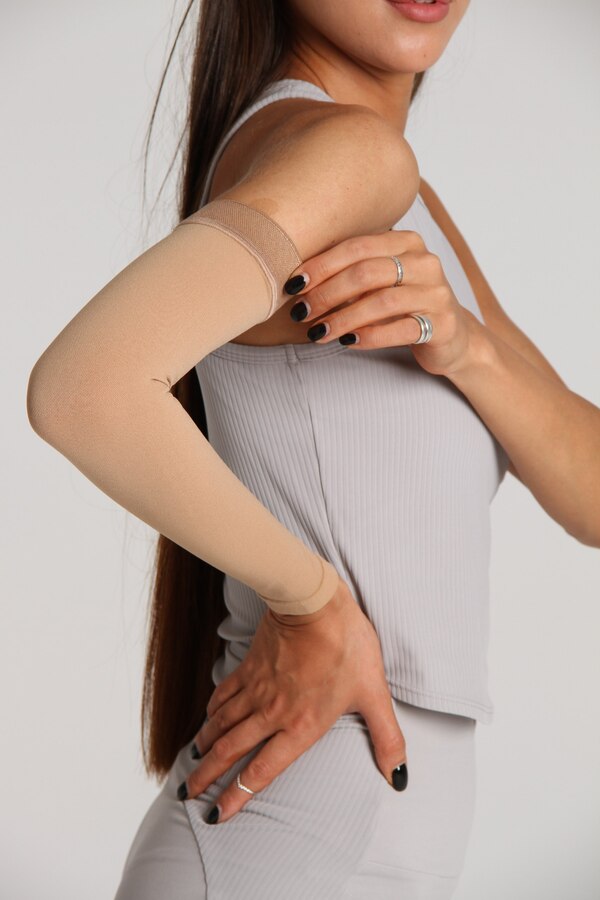
Lymphedema of the arm is associated with impaired lymphatic drainage. This can lead to swelling, a feeling of heaviness, discomfort, and changes in the volume of the limb. In such cases, a doctor may prescribe a compression sleeve — a medical device with a calculated level of pressure. After the prescription, it is important not to buy a product "approximately in size," but to prepare for selection: clarify the compression class, take measurements, and understand if additional compression is needed for the hand.
Checklist before selecting a compression sleeve
1. Clarify the doctor's prescription
The prescription may specify:
- compression class;
- type of product: sleeve, sleeve with glove, sleeve with shoulder fixation;
- wearing regimen;
- date of follow-up examination.
If this information is not available, it should be clarified with the treating physician. The compression sleeve is selected taking into account the diagnosis, area of swelling, and condition of the tissues.
2. Check the compression class
The compression class indicates the pressure exerted by the product. For example, a class 2 compression sleeve creates a pressure of 22–32 mm Hg. This parameter should not be chosen independently. When purchasing, it is important to check that the product corresponds exactly to the compression class prescribed by the doctor.
3. Prepare for taking measurements
The sleeve cannot be selected based on clothing size or "by eye." Accurate measurements are needed for a proper fit:
- wrist circumference;
- forearm circumference;
- elbow circumference;
- upper arm circumference;
- length of the arm to the upper point of the product;
- presence or absence of swelling in the hand.
If the size is chosen incorrectly, the sleeve may roll down, form folds, constrict the arm, or fail to create the necessary pressure distribution.
4. Clarify if a glove is needed
In lymphedema, swelling may affect not only the forearm and shoulder but also the hand. In this case, the doctor may prescribe a sleeve with a glove or a separate compression glove. It is not advisable to exclude or add a glove on your own: this changes the compression scheme.
5. Pay attention to fixation and material
The sleeve must be securely held on the shoulder, not roll down, and not constrict the arm. It is important that the product does not form rough folds and does not hinder bending the arm at the elbow.
For daily wear, the following are also important:
- absence of rough seams;
- air and moisture exchange;
- soft contact with the skin;
- comfortable fixation on the shoulder;
- porous structure of the material.
A seamless design helps reduce the risk of skin injury, and modern materials make the product more comfortable for prolonged use.
Why a sleeve cannot be chosen "approximately"
A compression sleeve does not work like a regular elastic product. Its task is to create a specified and evenly distributed pressure: more pronounced in the wrist area and gradually decreasing towards the upper third of the shoulder.
This is why the compression class, precise measurements, and proper fit are important during selection. If the sleeve is chosen "by eye," the pressure may be distributed incorrectly: the product will roll down, form folds, constrict certain areas, or, conversely, fail to provide the necessary support.
This difference is well explained by Elena Vladimirovna Shishova, a phlebologist and vascular surgeon (angiologist), when discussing why medical compression knitwear cannot be replaced with regular elastic bandaging.
Comment by Elena Vladimirovna Shishova
«Compression knitwear provides constant compression with a specified level of pressure. An elastic bandage does not perform this function: it can unwind, shift, and it can be difficult for the patient to independently create the required level of compression on the limb.»
Therefore, in cases of lymphedema, it is important to use a product whose parameters correspond to the doctor's prescription and individual measurements of the arm. In compression therapy, not just density matters, but the accuracy of pressure and its stability during wear.
What to check before purchase
Before purchasing a compression sleeve, check:
- whether the compression class is indicated;
- whether the measurements are taken correctly;
- whether the product is suitable for the right or left arm;
- whether there are instructions for use;
- whether the registration certificate is indicated.
If pain, numbness, skin color changes, increased swelling, or pronounced discomfort occur after starting to wear, it is necessary to consult a doctor.
The company "Ekoten" has been producing medical compression knitwear for over 17 years. All products have Registration Certificates and are included in the "Register of Russian Industrial Products." Any decisions regarding the prescription of compression products are made exclusively by the treating physician. This material is for informational purposes only.