

 RU
 ZH
 KO
 ES
 FR
 KZ
 UZ
Where to start if you have been prescribed a compression sleeve for lymphedema
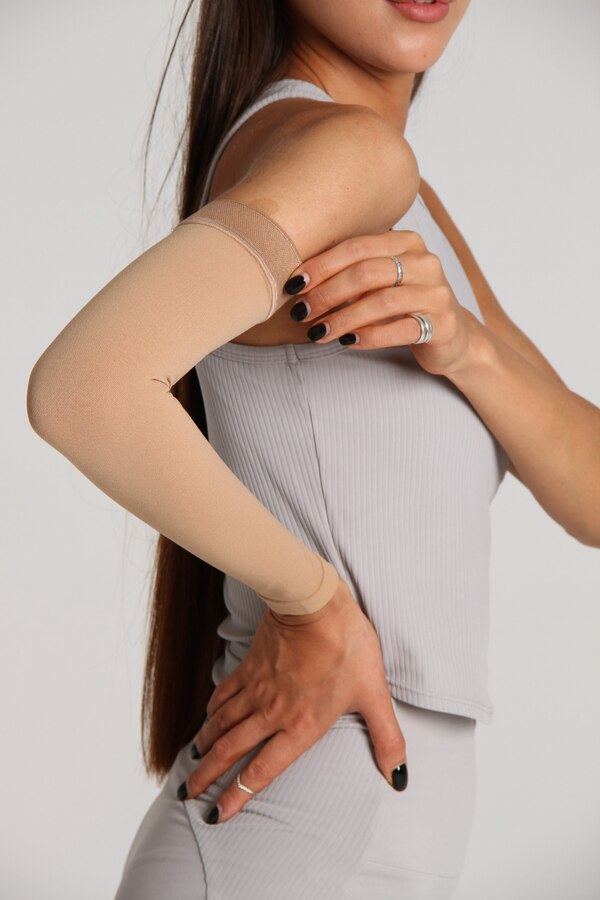
This material was prepared with the participation of Dr E.V. Shishova
Lymphedema of the arm is associated with impaired lymph drainage. This can cause swelling, a feeling of heaviness, discomfort and a change in the volume of the limb. In such cases the doctor may prescribe a compression sleeve — a medical product with a calculated pressure level. Once it has been prescribed, it is important not to buy a product that is "roughly the right size" but to prepare for the fitting: check the compression class, take measurements and find out whether additional compression for the hand is needed.
Checklist before fitting a compression sleeve
1. Check the doctor's prescription
The prescription may specify:
- the compression class;
- the type of product: sleeve, sleeve with glove, sleeve with shoulder attachment;
- the wearing regimen;
- the date of the follow-up examination.
If this information is missing, ask your attending physician. A compression sleeve is selected taking into account the diagnosis, the area of swelling and the condition of the tissues.
2. Check the compression class
The compression class shows how much pressure the product exerts. For example, a class 2 compression sleeve creates a pressure of 22–32 mmHg. This parameter must not be chosen on your own. When buying, it is important to check that the product corresponds exactly to the compression class prescribed by the doctor.
3. Prepare for taking measurements
A sleeve must not be chosen by clothing size or "by eye". A proper fit requires accurate measurements:
- wrist circumference;
- forearm circumference;
- circumference at the elbow;
- upper arm circumference;
- arm length up to the top of the product;
- whether or not there is swelling of the hand.
If the size is chosen incorrectly, the sleeve may roll down, form folds, constrict the arm or fail to create the required pressure distribution.
4. Find out whether a glove is needed
With lymphedema, swelling may affect not only the forearm and upper arm but also the hand. In this case the doctor may prescribe a sleeve with a glove or a separate compression glove. You should not leave out or add a glove on your own: this changes the compression scheme.
5. Pay attention to the fastening and material
The sleeve must stay securely on the shoulder without rolling down or constricting the arm. It is important that the product does not form coarse folds and does not prevent you from bending your arm at the elbow.
For everyday wear the following are also important:
- no coarse seams;
- air and moisture exchange;
- soft contact with the skin;
- comfortable fastening on the shoulder;
- a porous material structure.
A seamless design helps reduce the risk of skin injury, and modern materials make the product more comfortable for long-term use.
Why a sleeve cannot be chosen "approximately"
A compression sleeve does not work like an ordinary elastic product. Its task is to create a set, evenly distributed pressure: stronger at the wrist and gradually decreasing towards the upper third of the upper arm. That is why the compression class, accurate measurements and the right fit are important when selecting it. If a sleeve is chosen "by eye", the pressure may be distributed incorrectly: the product will roll down, form folds, constrict certain areas or, on the contrary, fail to provide the necessary support.
The importance of maintaining correct graduated compression is well explained by Elena Vladimirovna Shishova, phlebologist and vascular surgeon (angiosurgeon), when she talks about why medical compression hosiery cannot be replaced with ordinary elastic bandaging.
Comment by Elena Vladimirovna Shishova:
"Compression hosiery provides constant compression with a set pressure level. An elastic bandage does not do this: it can unwind and shift, and it is often difficult for patients to create the required level of compression on the limb themselves."
Therefore, with lymphedema it is important to use a product whose parameters correspond to the doctor's prescription and the individual measurements of the arm. In compression therapy, what matters is not just density but the accuracy of the pressure and its stability throughout wear.
What to check before buying
Before buying a compression sleeve, check:
- whether the compression class is indicated;
- whether the measurements were taken correctly;
- whether the product is for the right or the left arm;
- whether there are instructions for use;
- whether the registration certificate is indicated.
If pain, numbness, a change in skin colour, increased swelling or marked discomfort appear after you start wearing it, you must see a doctor.
Ecoten has been manufacturing medical compression hosiery for more than 17 years. All products have Registration Certificates and are included in the "Register of Russian Industrial Products". Any decisions on prescribing compression products are made exclusively by the attending physician. This material is for information purposes only.
Follow our group on VKontakte